Creating a rich and flavorful beef stock is a fundamental skill that can elevate your culinary creations. This basic beef stock recipe serves as a versatile base for soups, stews, and sauces, infusing them with deep, savory notes. The process involves roasting beef bones and simmering them with aromatic vegetables and herbs, resulting in a stock that is both hearty and delicious.
While most of the ingredients in this basic beef stock recipe are common, you might need to pay special attention to the beef bones. These are not always readily available in every supermarket, so you may need to visit a butcher or a specialty meat store. Additionally, fresh thyme and bay leaf might not be staples in every kitchen, but they can usually be found in the fresh herbs section or the spice aisle.
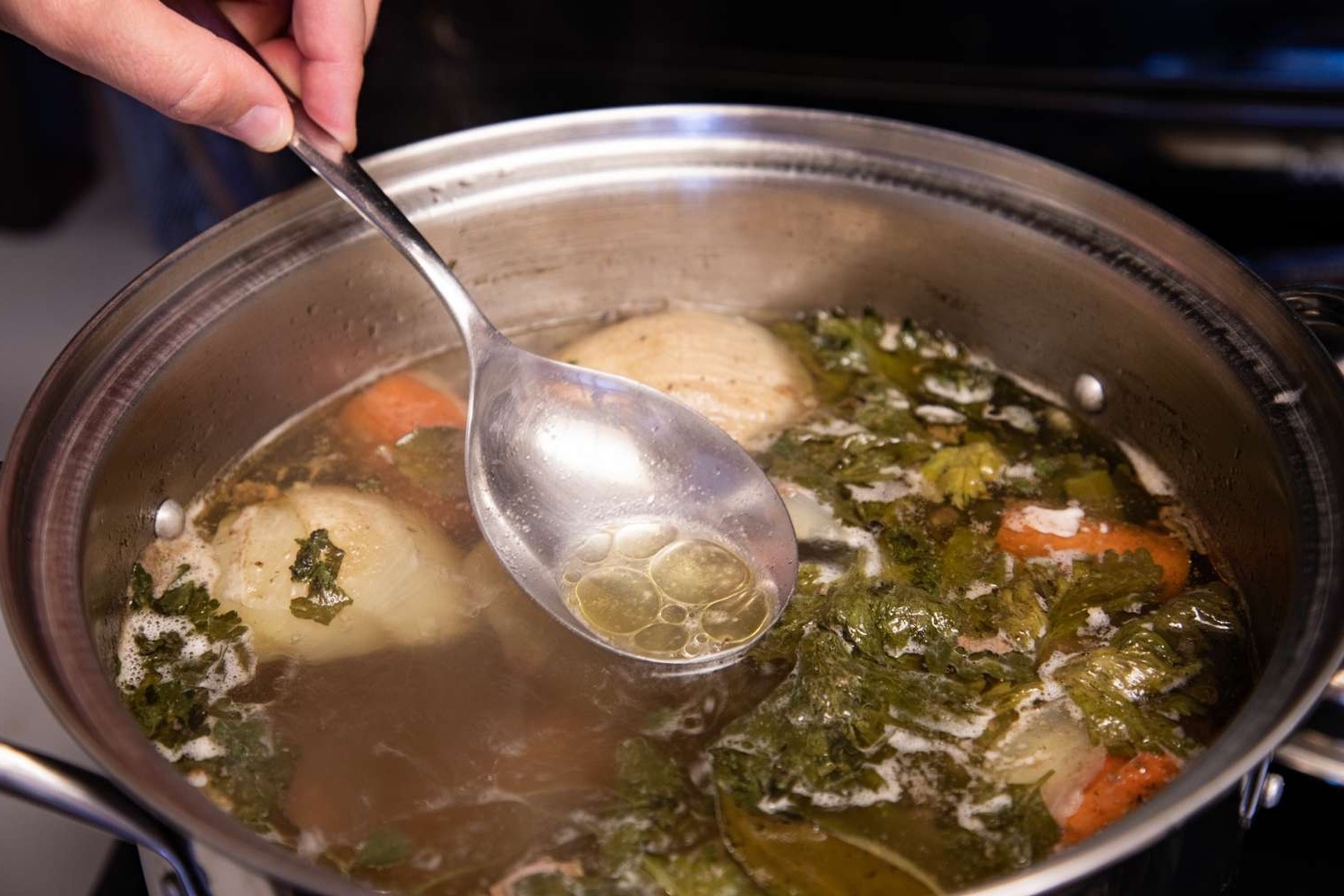
Ingredients For Basic Beef Stock Recipe
Beef bones: The foundation of the stock, providing rich flavor and nutrients.
Onion: Adds sweetness and depth to the stock.
Carrots: Contributes natural sweetness and color.
Celery: Adds a subtle, earthy flavor.
Garlic: Infuses the stock with a mild, aromatic flavor.
Thyme: Provides a fragrant, herbal note.
Bay leaf: Adds a subtle, slightly floral flavor.
Water: The base liquid that extracts flavors from the ingredients.
Technique Tip for Making Beef Stock
Roasting the beef bones before simmering them in water enhances the flavor of your beef stock. The caramelization that occurs during roasting adds a depth of flavor that you wouldn't achieve by simply boiling the bones. Make sure to spread the bones out in a single layer on the baking sheet to ensure even browning.
Suggested Side Dishes
Alternative Ingredients
beef bones - Substitute with chicken bones: Chicken bones can provide a rich and flavorful stock, though it will have a lighter taste compared to beef stock.
beef bones - Substitute with vegetable scraps: For a vegetarian option, use a mix of vegetable scraps like mushroom stems, potato peels, and corn cobs to create a hearty broth.
onion - Substitute with leeks: Leeks offer a milder, slightly sweeter flavor that can enhance the stock without overpowering it.
onion - Substitute with shallots: Shallots provide a more delicate and nuanced flavor compared to onions, adding complexity to the stock.
carrots - Substitute with parsnips: Parsnips have a similar texture to carrots but offer a sweeter and slightly spicier flavor.
carrots - Substitute with sweet potatoes: Sweet potatoes add a touch of sweetness and a creamy texture to the stock.
celery - Substitute with fennel stalks: Fennel stalks provide a subtle anise flavor that can add depth to the stock.
celery - Substitute with celeriac: Celeriac, or celery root, has a similar flavor to celery but with a more intense, earthy taste.
garlic - Substitute with shallots: Shallots can provide a milder, sweeter flavor that complements the other ingredients in the stock.
garlic - Substitute with garlic powder: Garlic powder can be used in a pinch, though it will lack the fresh, pungent flavor of crushed garlic.
thyme - Substitute with rosemary: Rosemary offers a robust, pine-like flavor that can stand in for thyme in the stock.
thyme - Substitute with oregano: Oregano provides a slightly different but still aromatic flavor that can enhance the stock.
bay leaf - Substitute with dried basil: Dried basil offers a sweet and slightly peppery flavor that can add depth to the stock.
bay leaf - Substitute with dried sage: Dried sage provides an earthy, slightly peppery flavor that can complement the other ingredients in the stock.
water - Substitute with vegetable broth: Vegetable broth can add additional layers of flavor to the stock.
water - Substitute with chicken broth: Chicken broth can provide a richer, more complex base for the stock.
Alternative Recipes Similar to Beef Stock
How to Store or Freeze Your Beef Stock
- Allow the beef stock to cool completely before storing. This helps prevent condensation, which can lead to spoilage.
- Use airtight containers or heavy-duty freezer bags to store the beef stock. Label each container with the date to keep track of freshness.
- For short-term storage, refrigerate the beef stock for up to 4-5 days. Make sure to remove any solidified fat from the surface before using.
- For long-term storage, freeze the beef stock in portions. This makes it easier to use only what you need without defrosting the entire batch.
- Consider using ice cube trays to freeze small portions of beef stock. Once frozen, transfer the cubes to a freezer bag. This is perfect for adding a small amount of flavor to soups or sauces.
- When freezing in larger containers, leave some space at the top to allow for expansion as the stock freezes.
- To defrost, place the container in the refrigerator overnight or use the defrost setting on your microwave. Avoid thawing at room temperature to prevent bacterial growth.
- Once thawed, bring the beef stock to a boil before using to ensure it is safe to consume.
- If you plan to use the beef stock in a soup or stew, you can add it directly to the pot without thawing. Just adjust the cooking time accordingly.
How to Reheat Leftovers
Stovetop Method: Pour the beef stock into a saucepan and heat over medium heat. Stir occasionally until it reaches your desired temperature. This method helps maintain the rich flavors of the stock.
Microwave Method: Transfer the beef stock to a microwave-safe bowl. Cover with a microwave-safe lid or plastic wrap with a small vent. Heat on high in 1-minute intervals, stirring in between, until hot. Be cautious as microwaving can sometimes cause uneven heating.
Slow Cooker Method: If you have a bit more time, pour the beef stock into a slow cooker and set it to low. Allow it to heat for about 1-2 hours. This gentle method ensures the stock warms evenly without losing its depth of flavor.
Double Boiler Method: Place the beef stock in a heatproof bowl or smaller pot. Set this over a larger pot of simmering water. Stir occasionally until the stock is heated through. This method is excellent for preventing any risk of scorching.
Sous Vide Method: If you have a sous vide machine, seal the beef stock in a vacuum-sealed bag or a ziplock bag using the water displacement method. Set the sous vide to 165°F (74°C) and immerse the bag in the water bath for about 30 minutes. This method ensures precise and even heating.
Essential Tools for Making Beef Stock
Oven: Used to roast the beef bones at 400°F (200°C) to enhance their flavor.
Baking sheet: Provides a flat surface for roasting the beef bones evenly.
Large pot: Holds all the ingredients and water for simmering the stock.
Fine-mesh strainer: Strains the stock to remove solids and ensure a clear liquid.
Large bowl: Collects the strained stock after it has been filtered.
Refrigerator: Cools the stock to allow the fat to solidify for easy removal.
Knife: Used to quarter the onion and chop the carrots and celery.
Cutting board: Provides a safe surface for chopping vegetables.
Tongs: Helps to handle the hot roasted bones safely.
Skimmer: Removes foam and impurities from the surface of the simmering stock.
Measuring cups: Measures the 10 cups of water accurately.
Ladle: Transfers the stock from the pot to the fine-mesh strainer.
Time-Saving Tips for Making Beef Stock
Roast in advance: Roast the beef bones a day ahead and store them in the fridge to save time on the cooking day.
Use a slow cooker: Transfer all ingredients to a slow cooker and cook on low for 8-10 hours. This allows you to be hands-off.
Pre-chop vegetables: Chop the onion, carrots, and celery in advance and store them in airtight containers.
Freeze portions: Make a large batch of beef stock and freeze it in portions for future use, reducing the need to make it frequently.
Skim efficiently: Use a fine-mesh skimmer to quickly remove foam and impurities, keeping the stock clear.
Basic Beef Stock Recipe
Ingredients
Main Ingredients
- 2 pounds beef bones preferably with some meat on them
- 1 large onion quartered
- 2 large carrots chopped
- 2 stalks celery chopped
- 2 cloves garlic crushed
- 2 sprigs thyme
- 1 leaf bay leaf
- 10 cups water
Instructions
- 1. Preheat your oven to 400°F (200°C). Place the beef bones on a baking sheet and roast for about 30 minutes until browned.
- 2. Transfer the roasted bones to a large pot. Add the onion, carrots, celery, garlic, thyme, bay leaf, and water.
- 3. Bring to a boil, then reduce the heat to low. Simmer uncovered for about 4 hours, skimming off any foam that rises to the surface.
- 4. Strain the stock through a fine-mesh strainer into another pot or large bowl. Discard the solids.
- 5. Let the stock cool, then refrigerate. Once chilled, remove any solidified fat from the surface.
Nutritional Value
Keywords
More Amazing Recipes to Try 🙂
- Meatballs Recipe45 Minutes
- Cold Corn Salad Recipe15 Minutes
- Creme Brulee Recipe1 Hours
- Italian Butter Cookies Recipe27 Minutes
- French Dressing Recipe10 Minutes
- Sincronizada Recipe10 Minutes
- Hot Ham and Cheese Recipe15 Minutes
- Sausage Pepper and Onion Sandwiches Recipe30 Minutes










Leave a Reply