
This Greek-style beef stew is a hearty and flavorful dish that brings the essence of Mediterranean cuisine to your table. The combination of tender beef chunks, aromatic herbs, and a rich tomato and red wine broth creates a comforting meal perfect for any occasion. The addition of potatoes and carrots makes it a complete, satisfying dish that is sure to please everyone.
When preparing this recipe, you may need to purchase a few ingredients that are not always found in a typical pantry. Beef chuck is a specific cut of meat that is ideal for stewing due to its marbling and tenderness when cooked slowly. Red wine is another key ingredient that adds depth and richness to the stew, so be sure to choose a good quality wine. Bay leaves and dried oregano might also be items you need to pick up if you don't already have them on hand.
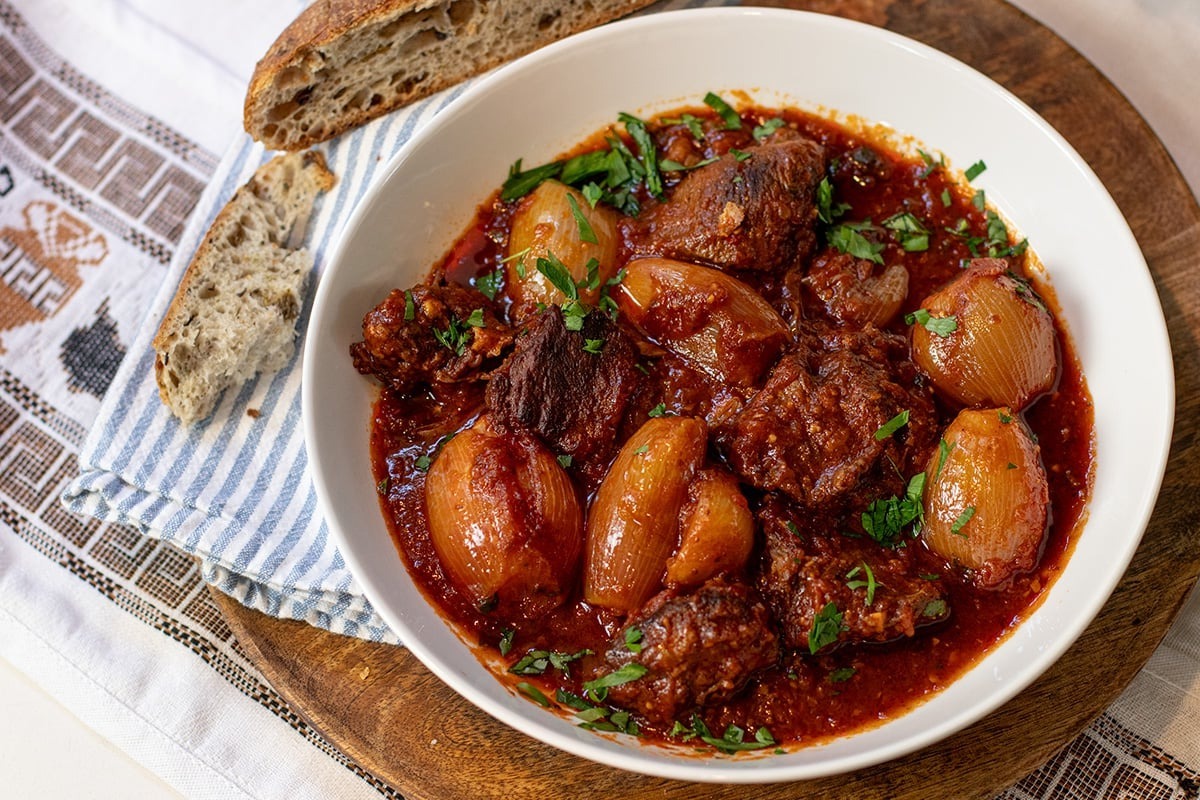
Ingredients For Greek Style Beef Stew
Beef chuck: A cut of beef that is perfect for slow cooking, becoming tender and flavorful.
Olive oil: Used for browning the beef and sautéing the onions and garlic, adding a rich flavor.
Onion: Adds sweetness and depth to the stew.
Garlic: Provides a pungent, aromatic flavor that enhances the overall taste.
Beef broth: Forms the base of the stew, adding a savory depth.
Red wine: Adds richness and complexity to the stew's flavor.
Tomato paste: Thickens the stew and adds a concentrated tomato flavor.
Dried oregano: A classic Mediterranean herb that adds a distinctive flavor.
Dried thyme: Adds an earthy, slightly minty flavor.
Bay leaves: Infuse the stew with a subtle, herbal flavor.
Salt and pepper: Essential seasonings that enhance all the other flavors.
Potatoes: Add heartiness and absorb the flavors of the stew.
Carrots: Add sweetness and texture to the stew.
Technique Tip for This Recipe
When browning the beef chunks, make sure not to overcrowd the pot. Overcrowding will cause the meat to steam rather than sear, which can affect the flavor and texture of your stew. Brown the beef in batches if necessary to ensure each piece gets a nice, caramelized crust. This step is crucial for developing a deep, rich flavor base for your Greek style beef stew.
Suggested Side Dishes
Alternative Ingredients
beef chuck - Substitute with lamb shoulder: Lamb shoulder offers a similar texture and rich flavor, making it a great alternative for a Greek-style stew.
olive oil - Substitute with grapeseed oil: Grapeseed oil has a neutral flavor and a high smoke point, suitable for browning meat.
onion - Substitute with shallots: Shallots provide a milder and slightly sweeter flavor, which can complement the stew well.
garlic - Substitute with garlic powder: Use garlic powder if fresh garlic is unavailable; it will still add the desired garlic flavor.
beef broth - Substitute with vegetable broth: Vegetable broth can be used for a lighter flavor and to make the dish suitable for those avoiding beef.
red wine - Substitute with balsamic vinegar: Balsamic vinegar adds acidity and depth of flavor similar to red wine.
tomato paste - Substitute with crushed tomatoes: Crushed tomatoes can provide a similar tomato flavor and thickness to the stew.
dried oregano - Substitute with fresh oregano: Fresh oregano can be used for a more vibrant and aromatic flavor.
dried thyme - Substitute with fresh thyme: Fresh thyme offers a more potent and aromatic flavor compared to dried thyme.
bay leaves - Substitute with thyme sprigs: Thyme sprigs can add a similar earthy flavor to the stew.
salt - Substitute with soy sauce: Soy sauce can add saltiness and umami flavor to the stew.
pepper - Substitute with white pepper: White pepper provides a milder heat and can be used as an alternative to black pepper.
potatoes - Substitute with sweet potatoes: Sweet potatoes add a different flavor profile and a touch of sweetness to the stew.
carrots - Substitute with parsnips: Parsnips offer a similar texture and a slightly sweeter flavor, making them a good alternative to carrots.
Other Alternative Recipes
How to Store / Freeze This Dish
Allow the Greek style beef stew to cool to room temperature. This helps prevent condensation inside the storage container, which can lead to a watery stew.
Transfer the stew into airtight containers. For optimal freshness, use containers that are both airtight and leak-proof. Glass containers with tight-fitting lids are ideal, but high-quality plastic containers work well too.
If you plan to consume the stew within a few days, store it in the refrigerator. It will keep well for up to 4 days. Ensure the container is placed in the coldest part of the fridge.
For longer storage, freezing is the best option. Portion the stew into individual servings before freezing. This makes it easier to thaw only what you need. Use freezer-safe containers or heavy-duty freezer bags to prevent freezer burn.
Label each container or bag with the date and contents. This helps you keep track of how long the stew has been stored and ensures you use the oldest batches first.
When ready to enjoy the stew, thaw it in the refrigerator overnight. This slow thawing process helps maintain the texture and flavor of the vegetables and beef.
Reheat the stew gently on the stovetop over medium heat, stirring occasionally. If the stew is too thick after reheating, add a splash of beef broth or water to reach the desired consistency.
Avoid reheating the stew multiple times, as this can degrade the quality and safety of the dish. Only reheat the amount you plan to consume.
For an added burst of freshness, garnish the reheated stew with freshly chopped parsley or a squeeze of lemon juice before serving.
How to Reheat Leftovers
Stovetop Method: Place the leftover stew in a saucepan. Add a splash of beef broth or water to maintain moisture. Heat over medium-low, stirring occasionally, until the beef and vegetables are warmed through. This method helps retain the stew's rich flavors and textures.
Oven Method: Preheat your oven to 350°F (175°C). Transfer the stew to an oven-safe dish and cover with foil. Bake for about 20-30 minutes, or until heated through. This gentle reheating method ensures even warming without drying out the beef and potatoes.
Microwave Method: Place the stew in a microwave-safe bowl. Cover with a microwave-safe lid or plastic wrap, leaving a small vent. Heat on medium power in 1-minute intervals, stirring in between, until the stew is hot. Be cautious not to overheat, as this can make the meat tough and the vegetables mushy.
Slow Cooker Method: Transfer the leftover stew to a slow cooker. Set it on low and heat for 1-2 hours, stirring occasionally. This method is perfect for maintaining the stew's hearty consistency and deep flavors.
Double Boiler Method: Place the stew in a heatproof bowl and set it over a pot of simmering water. Stir occasionally until the stew is heated through. This method is ideal for gentle reheating, preserving the beef's tenderness and the vegetables' integrity.
Best Tools for This Recipe
Large pot: A large pot is essential for browning the beef and simmering the stew to ensure even cooking and flavor development.
Wooden spoon: A wooden spoon is useful for stirring the ingredients without scratching the pot.
Chef's knife: A chef's knife is needed for chopping the onion, mincing the garlic, and cutting the beef, potatoes, and carrots into chunks.
Cutting board: A cutting board provides a safe and stable surface for chopping and preparing ingredients.
Measuring cups: Measuring cups are necessary for accurately measuring the beef broth, red wine, and other liquid ingredients.
Measuring spoons: Measuring spoons are used to measure out the tomato paste, oregano, thyme, salt, and pepper.
Tongs: Tongs are helpful for turning and removing the beef chunks from the pot.
Ladle: A ladle is useful for serving the stew once it is ready.
Peeler: A peeler is needed for peeling the potatoes and carrots before chopping them.
Garlic press: A garlic press can be used to mince the garlic cloves efficiently.
Timer: A timer helps keep track of the simmering times to ensure the stew is cooked perfectly.
How to Save Time on This Recipe
Prep ingredients ahead: Chop the onion, garlic, potatoes, and carrots the night before to save time on cooking day.
Use a slow cooker: After browning the beef, transfer all ingredients to a slow cooker and let it cook on low for 6-8 hours.
Batch cooking: Double the recipe and freeze half for a quick meal later.
Pre-measure spices: Measure out the oregano, thyme, salt, and pepper in advance to streamline the cooking process.
Quick broth: Use store-bought beef broth to save time on making your own.
Greek Style Beef Stew
Ingredients
Main Ingredients
- 1 kg Beef Chuck cut into chunks
- 2 tablespoon Olive Oil
- 1 Onion chopped
- 3 cloves Garlic minced
- 2 cups Beef Broth
- 1 cup Red Wine
- 2 tablespoon Tomato Paste
- 1 teaspoon Dried Oregano
- 1 teaspoon Dried Thyme
- 2 Bay Leaves
- to taste Salt and Pepper
- 2 cups Potatoes peeled and cubed
- 2 cups Carrots sliced
Instructions
- Heat olive oil in a large pot over medium heat. Add beef chunks and brown on all sides. Remove beef and set aside.
- In the same pot, add chopped onion and minced garlic. Sauté until onion is translucent.
- Return beef to the pot. Add beef broth, red wine, tomato paste, oregano, thyme, bay leaves, salt, and pepper. Stir well.
- Bring to a boil, then reduce heat to low. Cover and simmer for 1.5 hours.
- Add potatoes and carrots. Continue to simmer for another 30 minutes, or until vegetables are tender.
- Remove bay leaves before serving. Enjoy your Greek Style Beef Stew!
Nutritional Value
Keywords
Suggested Appetizers and Desserts
More Amazing Recipes to Try 🙂
- Carrot Salad Recipe10 Minutes
- PBM Sandwich Recipe5 Minutes
- Farmers Market Vegetarian Quesadillas Recipe25 Minutes
- Beefy Italian Ramen Skillet Recipe30 Minutes
- Broccoli Salad Recipe15 Minutes
- Lemon Cake Recipe45 Minutes
- Grilled Panini Sandwich Recipe15 Minutes
- Tangy Turkey and Swiss Sandwiches Recipe15 Minutes










Leave a Reply